
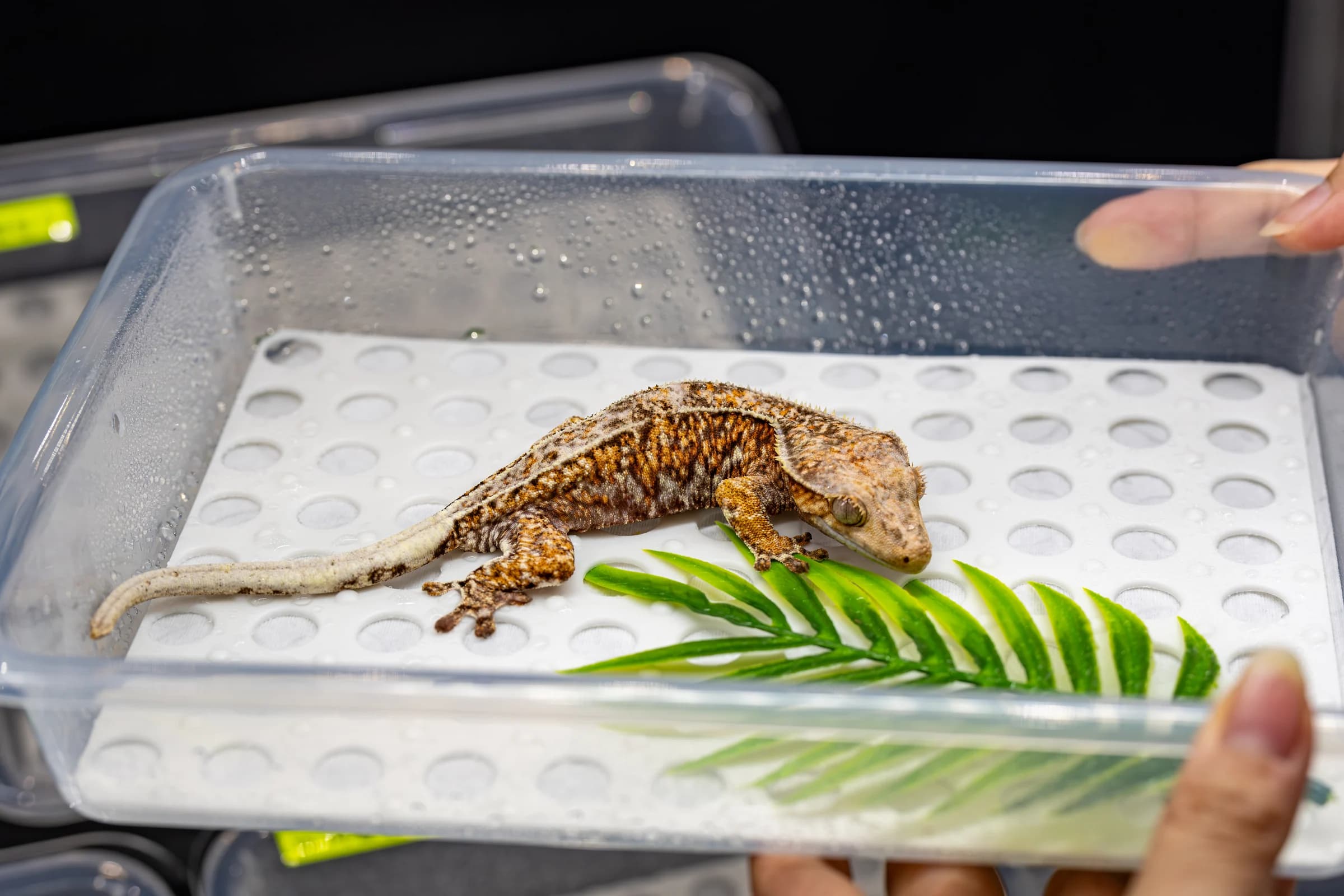
Remembering where Marbling began
Marbling began with WithGecko’s Sorang in 2022.
WithGecko’s Sorang was a female offspring of the Lilly White Alpha. Her fragmented pattern and translucency initially suggested a low-expression Lilly White, but her appearance as she matured led to further investigation.
Korea Reptile International introduces Korean Marbling to collectors and breeders overseas. Our own whole-body and detail photographs in the KRI photo collection give you time to discover which expressions appeal to you. Respecting the history of its discovery while showing the beauty of individual patterns and colours is the role we take on as its overseas export distributor.
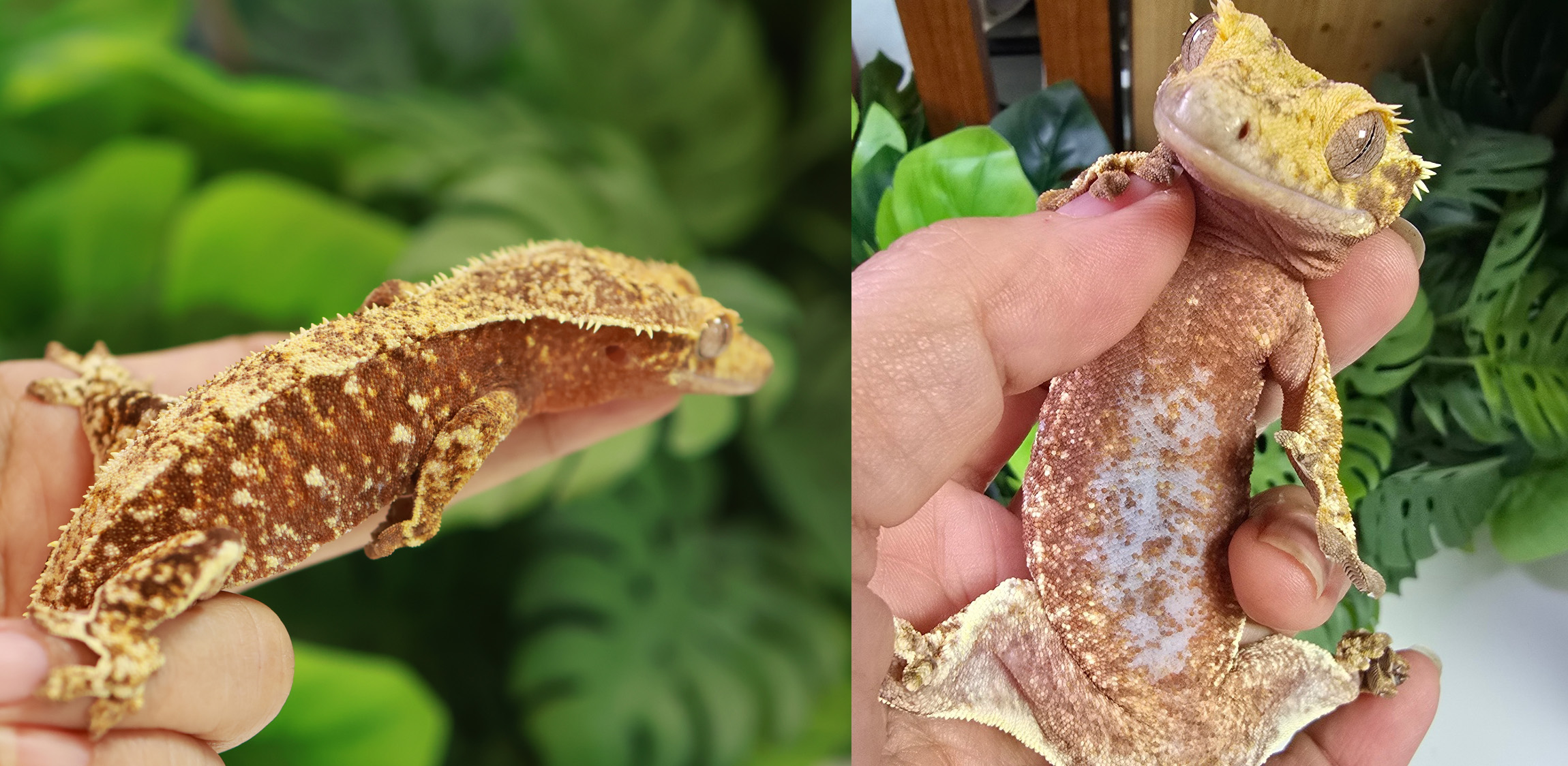
The article identifies this animal as Sorang. Compare the pale lateral markings on the left with the lighter belly areas on the right: both views help explain why Marbling is observed across the whole body.
The question raised by Alpha’s offspring
Sorang’s story also belongs to Alpha’s lineage. The 2025 Foundation Genetics Marbling account, with Yunju Lee among its contributors, records Marbling offspring from Alpha and several females, although Alpha looked like a typical Lilly White. A parent’s appearance did not plainly reveal what appeared in its offspring.
That account describes dark scales, apparent translucency, a wine-toned belly, and concentrated pale orbs and streaks. Dark areas and fragmented pattern can remain in the Lilly White combination. These observations concern how colour and pattern change together, beyond the amount of white alone.
We begin with discovery and breeding reports, then explain the genetic concepts and open questions needed to read them. Looking beyond the photographs helps explain why Marbling interests breeders as well as collectors.
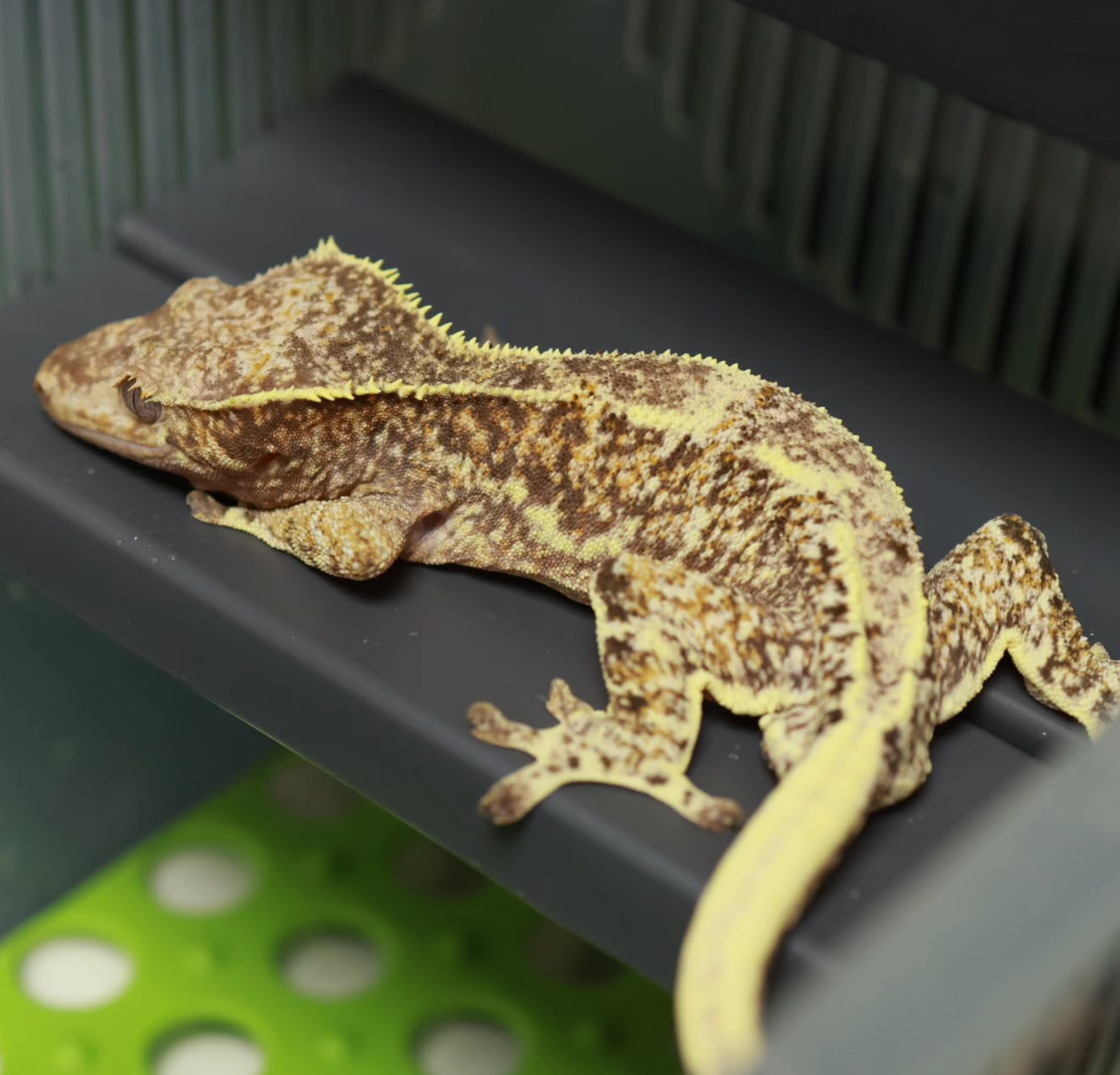
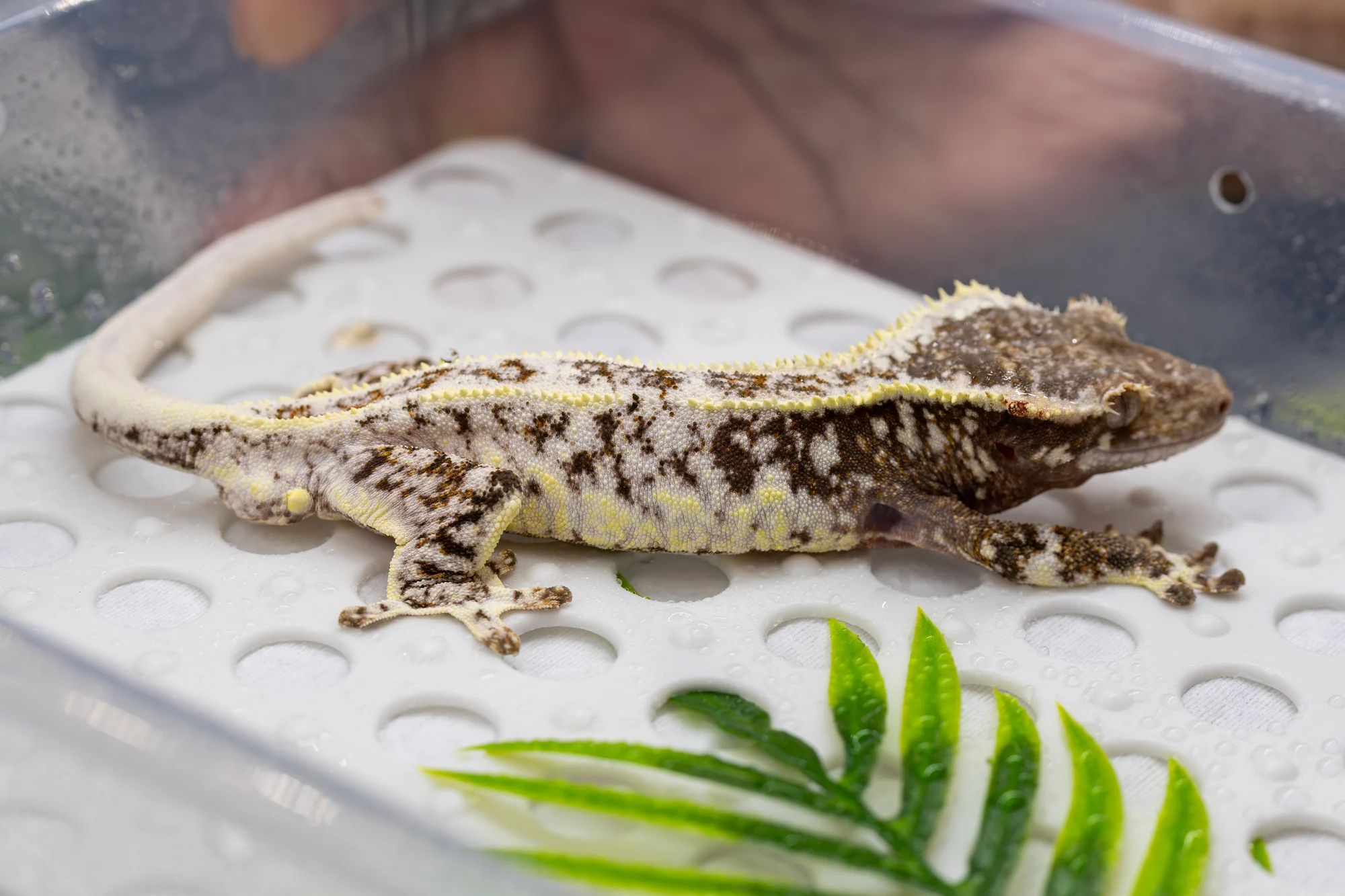
Light and dark markings continue from the head across the back and flanks. This view helps show how the pattern connects across the animal, beyond the amount of white in any single area.
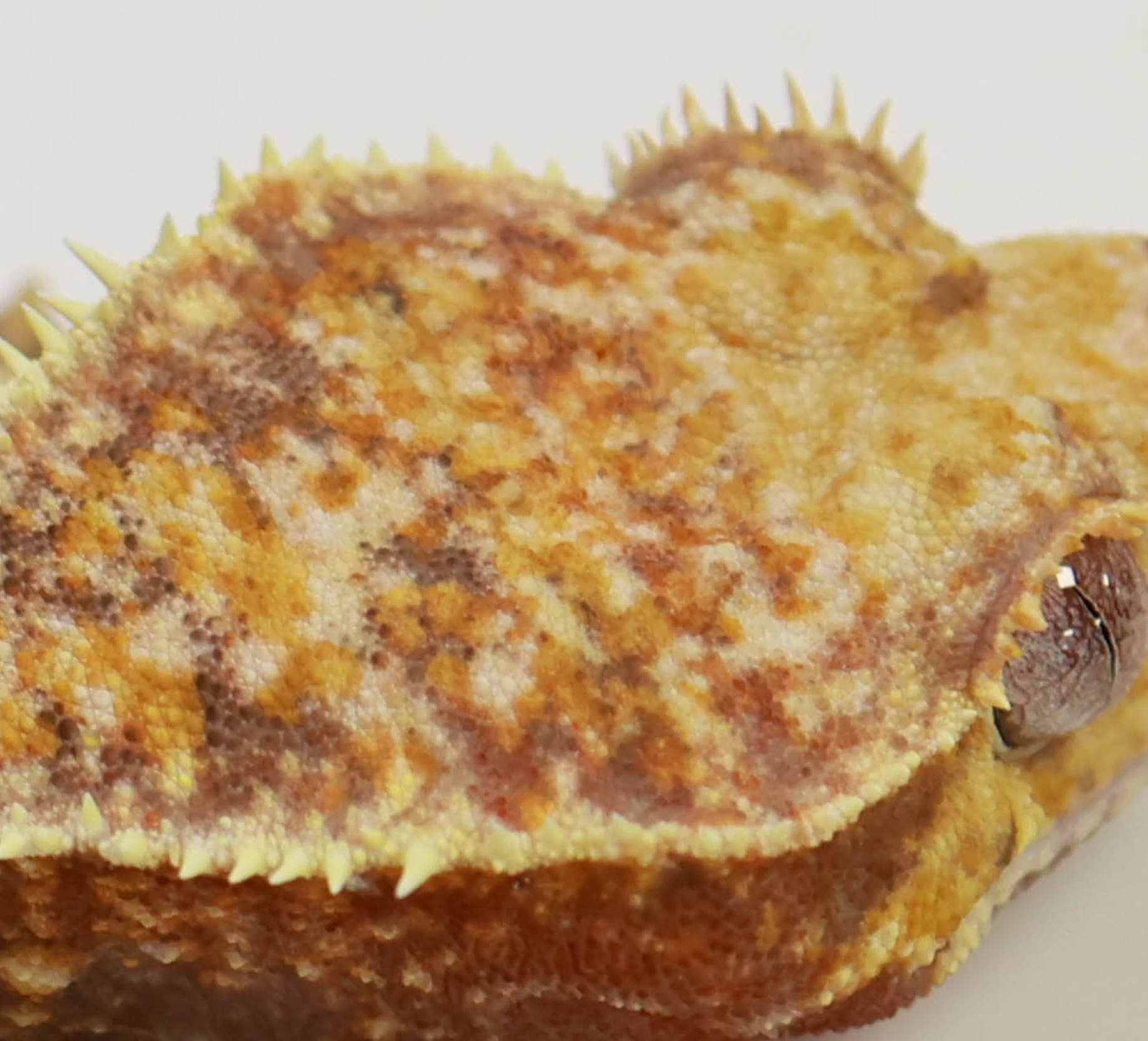
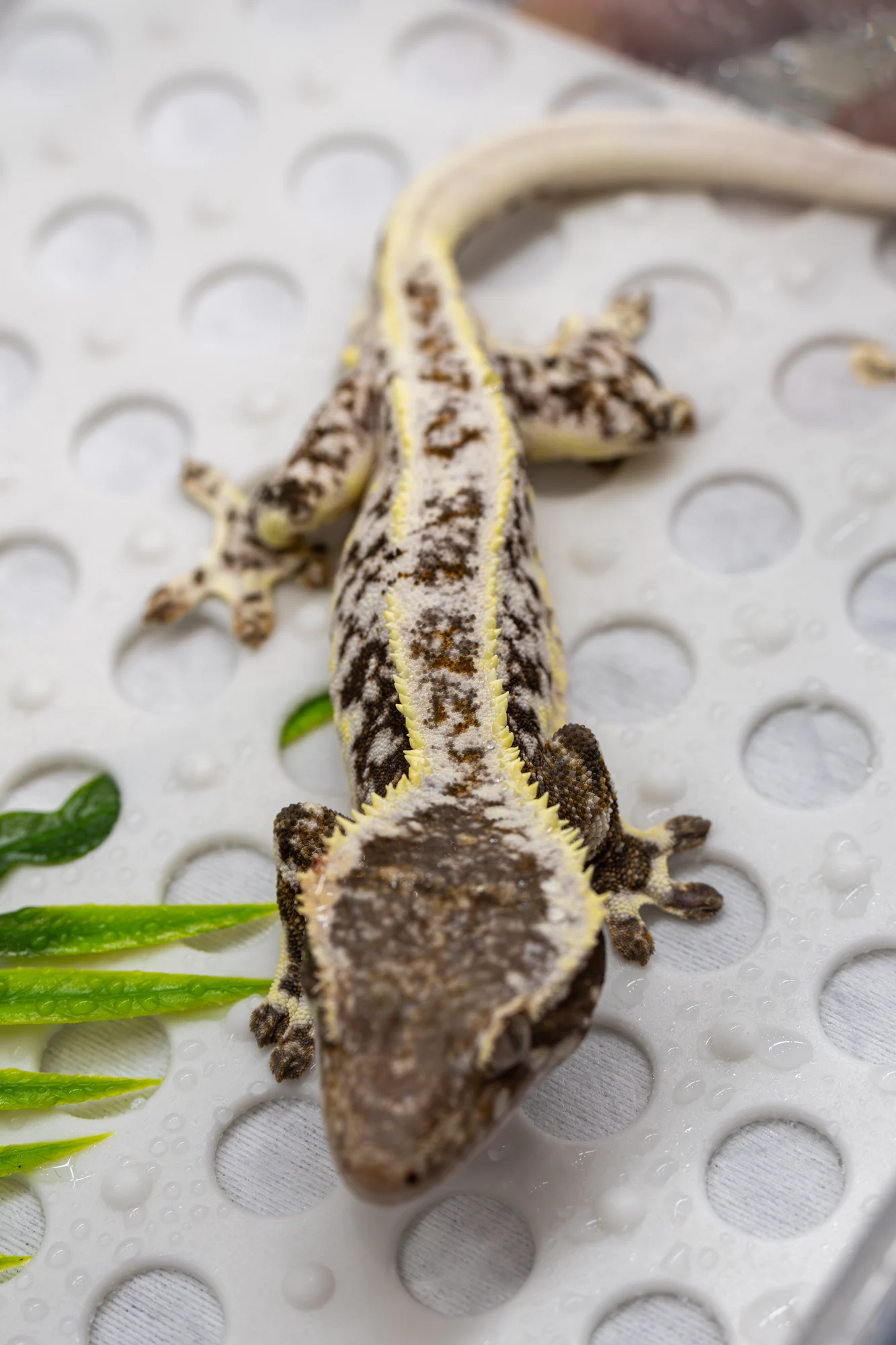
The close-up reveals small orange, brown and cream markings. Compare the crest edge with the distribution of colour across the centre of the head.
Following Marbling into the next generation
These reported WithGecko observations list offspring expressions by pairing. They do not guarantee outcomes or proportions in future offspring.
| Reported pairing | Reported offspring expressions |
|---|---|
| Marbling × Lilly White | Marbling · Marble Lilly · Lilly White · Normal · Leucistic |
| Marbling × Normal | Marbling · Normal · Marble Lilly |
| Marbling × Marble Lilly | Marbling · Marble Lilly · Lilly White · Normal · Leucistic |
| Marble Lilly × Normal | Marbling · Marble Lilly · Lilly White · Normal |
| Lilly White from these lines × Normal | Lilly White · Normal |
Leucistic here denotes the reported lethal Lilly White super form, not a breeding goal or an animal for sale.
The names distinguish reported expressions. Without sample sizes and repeated observations, this summary cannot establish inheritance or calculate outcome probabilities.
Marbling and Marble Lilly: what the names describe
In the breeding reports, Marble Lilly describes a Lilly White appearance retaining Marbling characteristics.
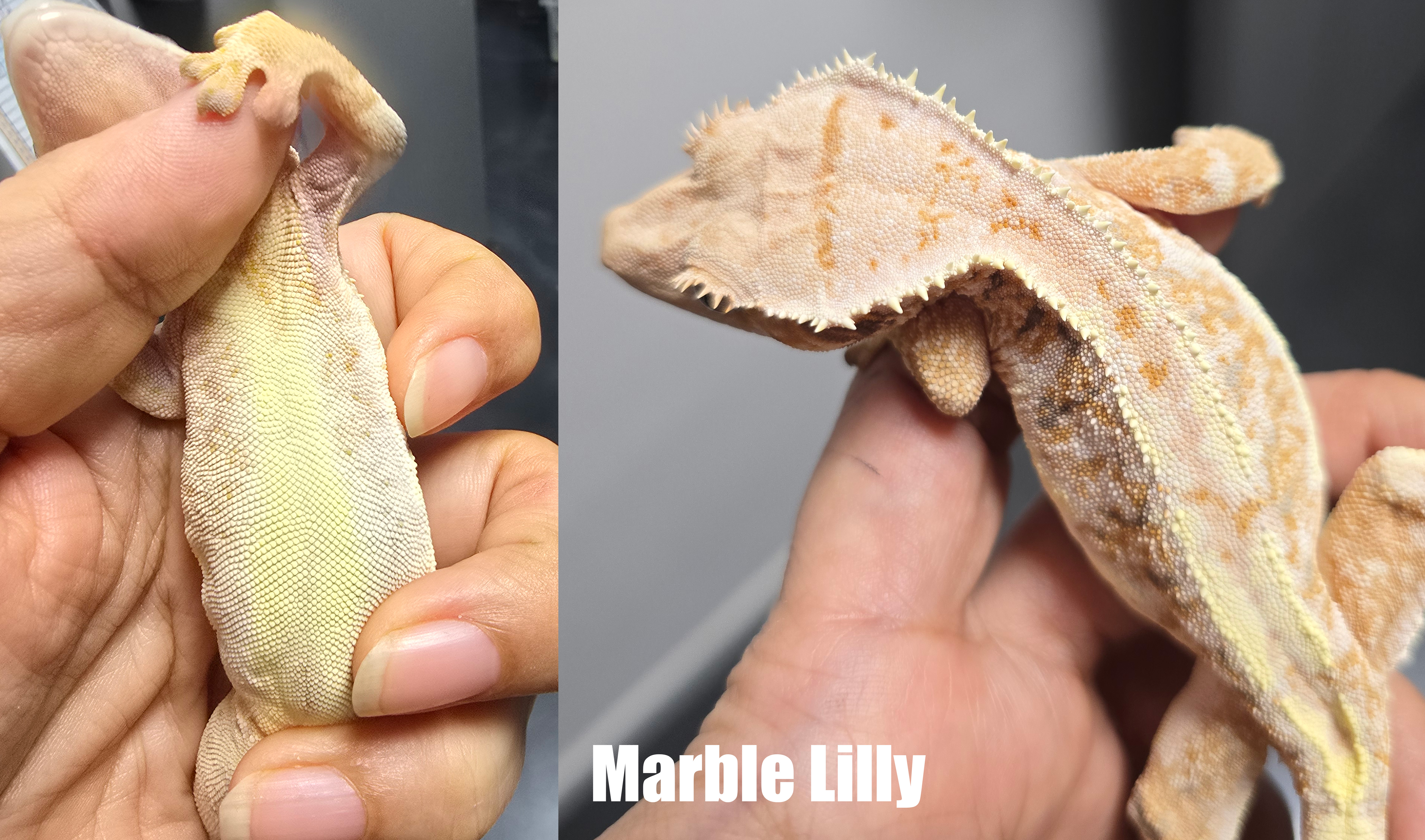
This photograph is labelled Marble Lilly in the reference. The paired underside and upper-body views show broad cream areas, small darker marks within them, and the boundary with the dark flank.
This distinction makes the table easier to read. Its names record how observers classified the offspring they saw. A name alone does not specify every genetic component of an animal or predict its next generation. Normal in that table is an appearance category used in the report; it should not be read as a laboratory confirmation that all related genetic factors are absent.
Phenotype means observable characteristics, while genotype refers to genetic makeup. Even animals with broad pale patterns can differ in where dark markings remain and how their boundaries form. Recording pale coverage, pattern fragmentation, dark scales and underside appearance separately makes it easier to compare how several characteristics occur together.
For KRI, a useful presentation begins with what you can see in the photographs, accompanied by verified parent and lineage information where available. Rather than expecting every animal with the same name to look alike, take time to explore the particular combination of features that attracts you.
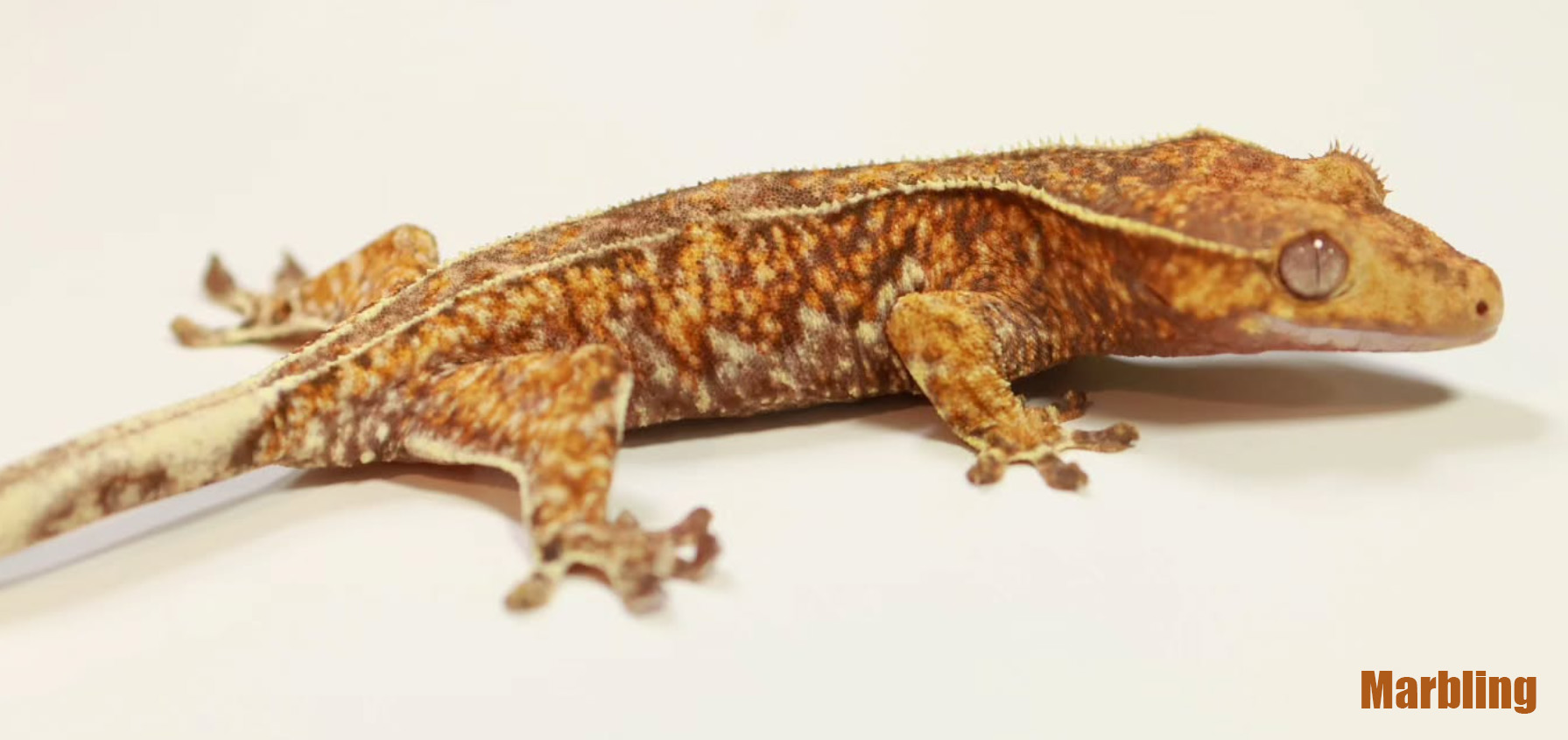
Labelled Marbling, this side view offers a visual contrast with the Marble Lilly above: notice the extent of the pale areas and the smaller breaks in the pattern. Appearance alone does not establish a genetic relationship.
- Marbling
- A name under which we examine intricate colour and pattern, comparing which features stand out in each animal.
- Marble Lilly
- An appearance label in the breeding records. Look at which Marbling details remain within the pale pattern.
- Lineage and breeding records
- Information connecting parents and offspring. Keep it distinct from visual labels so later observations can be compared.
Why did the leucistic observation raise a question?
IB EXOTIC links leucistic reports to possible Lilly interaction, using Luwak (Cappuccino × Sable) as analogy, not proof.
The Lilly White superform and Genetic Super Hypo should not be conflated merely because both use the word leucistic. Similar pale appearances do not identify the same genetic combination. Lil Monsters describes the homozygous Lilly White superform as non-viable. The report therefore should not be read as an attractive breeding target for maximum white.
In general genetics, alleles are alternative versions at the same genomic location. Having two copies of the same allele and having genes at different locations affect one another are different explanations. When two morphs are described as related, ask whether that means variants at one location, interaction between separate factors, or simply an observed association.
The 2025 Foundation Genetics Marbling account lists no known allelic relationship and no proven superform. It describes apparently dominant transmission requiring further pairings. A reported appearance in offspring and a demonstrated genetic mechanism are different levels of evidence.
Read together, these accounts suggest practical questions: how were offspring classified, what was known about the parents, and does the result recur in other lineages with similar appearances? These questions help define what a future record needs to show before one explanation becomes stronger than another.
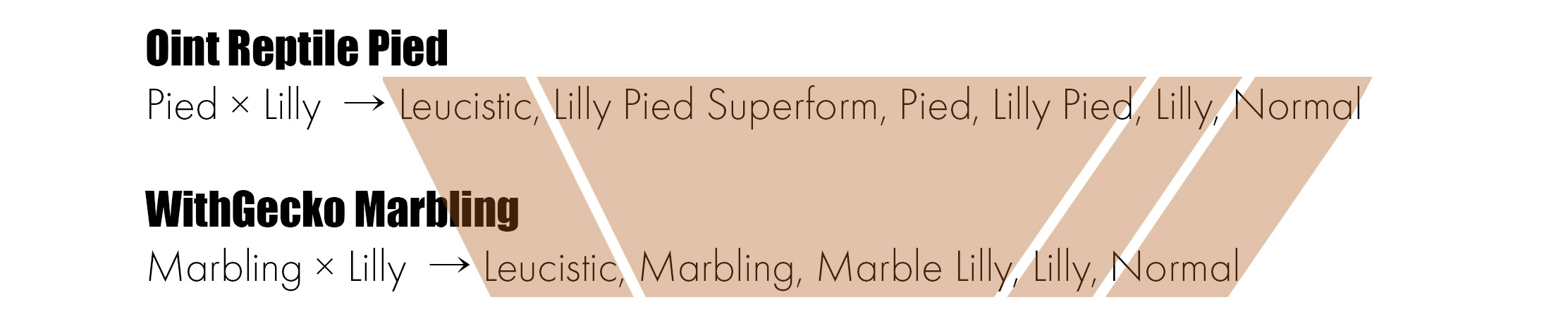
The diagram lists expressions discussed for Oint Reptile Pied above and WithGecko Marbling below. Compare the shared labels and the different names used. It is not a probability chart or a confirmed genetic model. Select the image to read it at its original size.
Why Phantom and Pixel enter the discussion
IB EXOTIC hypothesizes Phantom in Marbling-type Pied but not Oint-type Pied, citing Pixel as an analogy. This genotype remains unconfirmed.
The underlying idea is genetic interaction. Epistasis occurs when other genes modify or mask a gene’s expression. As a general illustration, a factor affecting pattern placement could look different if another factor reduces visible colour. This explains the kind of hypothesis being discussed; it is not a demonstrated mechanism in Marbling.
Pixel itself has not been interpreted identically by every breeder. In its 2024 project account, Pangea interpreted its own Pixel line as recessive without requiring another trait for expression. Consequently, a claim that all Pixel requires Phantom cannot be treated as an established rule across all lines.
Foundation Genetics also identifies visual overlap between Marbling and Pixel, Plague, Shatter and XXX as a reason for comparison. Similar-looking patterns can generate a useful research question without demonstrating that the traits are identical. Establishing whether different lines are being grouped under the same name is part of making that comparison meaningful.
KRI presents Phantom involvement as a research hypothesis. Our supplied Pied and Marbling photographs compare locations of expression; they do not determine Phantom status. Once the visible differences between feet and torso have been described, parent records and repeated offspring observations can help frame the next question.
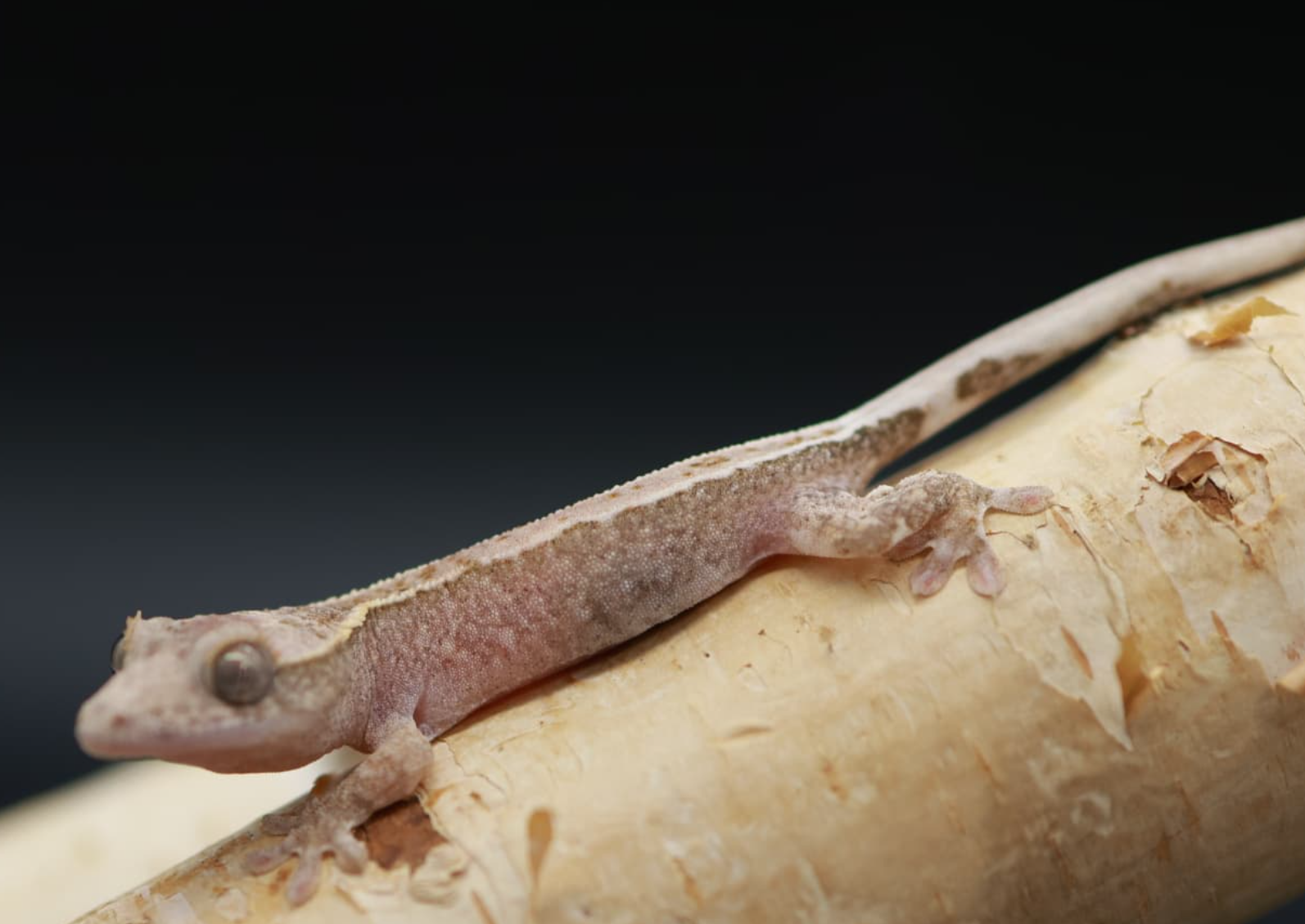
Small pale areas are visible on a light-brown body. Compare the distribution of the markings with the next photograph. This is not labelled as a confirmed Phantom or Pixel, or as the earlier stage of the same animal.
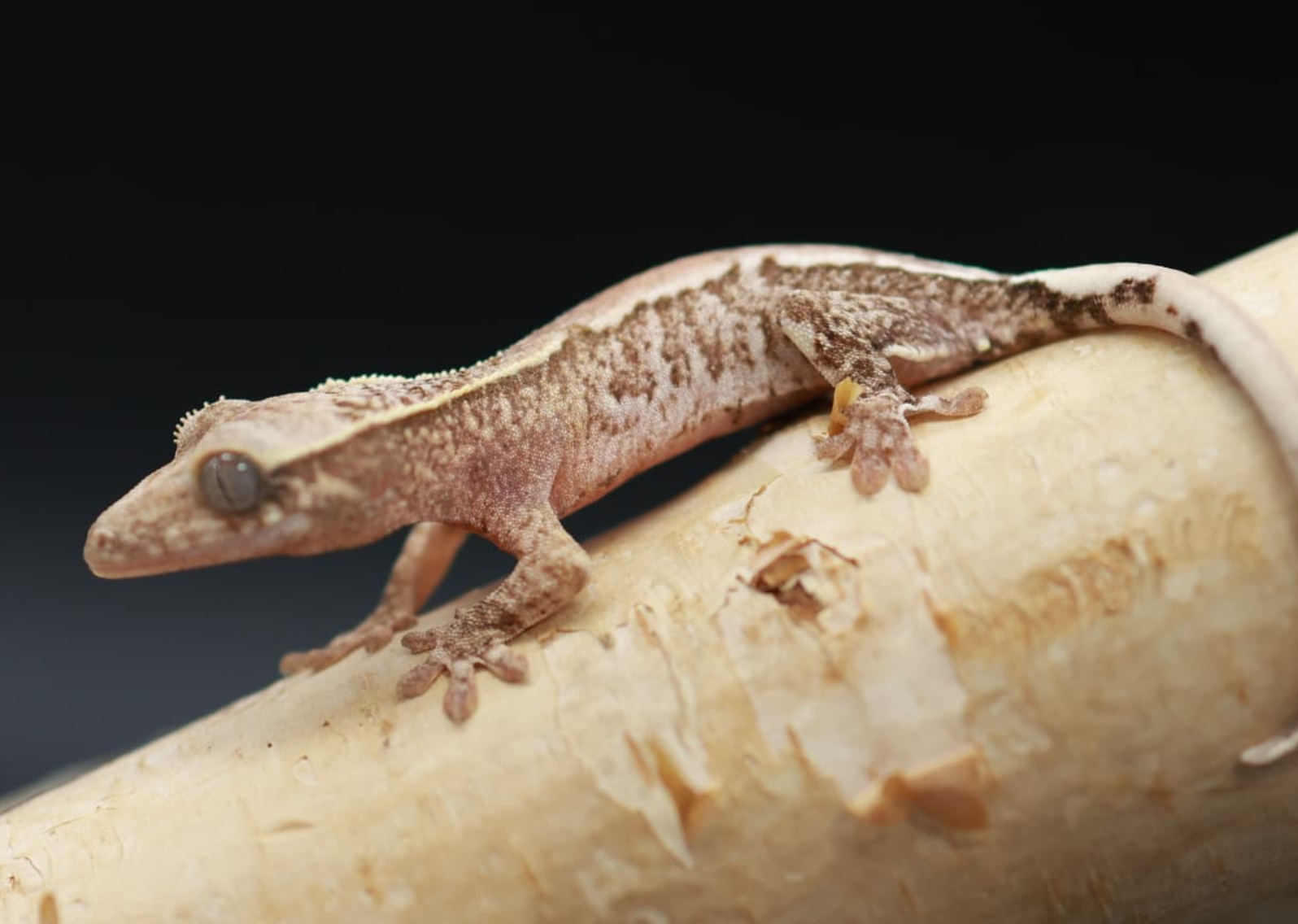
Broken brown-and-cream markings are more prominent towards the rear of the body. The photograph supports a comparison of visible expression, not confirmation of a genetic relationship with Phantom or Pixel.
Polygenic possibilities and variable expression
IB EXOTIC links varied expression and uncommon extremes to a possible polygenic explanation, rather than a confirmed inheritance model.
A polygenic characteristic is influenced by more than one gene. Its overall appearance cannot be explained by one allele alone, so combinations of factors matter. When environmental influences also contribute, multifactorial is the relevant term. Multiple genetic contributors and a large amount of pale pattern are not equivalent descriptions.
Expressivity and penetrance describe different questions. Expressivity concerns how strongly a feature appears in individuals with the relevant genetic condition; penetrance concerns the proportion in which it appears. Either concept can matter when appearances differ, so variation alone cannot establish polygenic inheritance.
A useful way to describe Marbling is to separate features instead of giving the entire animal one score. One animal might have broad pale flanks but few spots, another narrow pale areas with fine fragmentation, and another particularly visible underside contrast. Separate descriptions make it clearer what someone means by strong expression.
A major factor with dominant-looking transmission and background modifiers is one logically possible model. A combination of several factors is another. Rather than choosing between them from appearance alone, ask what observations would distinguish their predictions. The terms below are tools for reading the discussion, not confirmed diagnoses of Marbling.
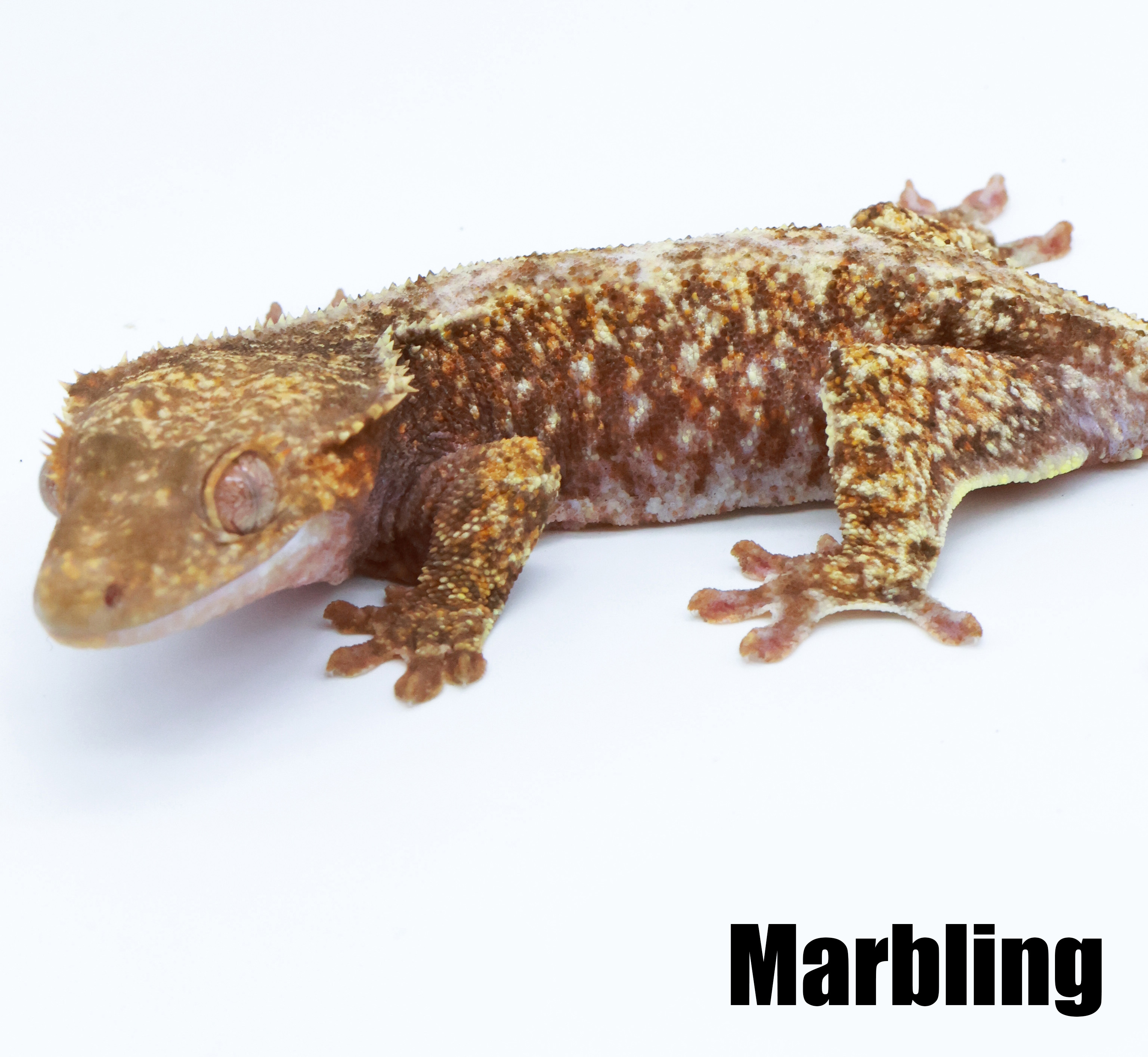
Another animal labelled Marbling shows irregular pale lines and fragments over a dark body. It illustrates visible differences between reference animals; those differences alone do not prove polygenic inheritance.
- Polygenic
- Several genes contribute to a characteristic.
- Expressivity
- How strongly a characteristic appears in an individual with the relevant genetic condition.
- Penetrance
- The proportion of individuals with a particular genetic condition in which the characteristic is observed.
- Genetic interaction
- How the presence of other genetic factors affects the expression of one factor.
What the next generation of records could clarify
Marbling’s potential invites us to distinguish explanations through records rather than promise a result in advance.
Start with consistent classification. If one observer prioritises fragmented flanks and another uses belly colour, they may give the same offspring different labels. Keeping whole-body, left and right flank, head and underside views together with the reason for a classification makes those differences visible.
Look at complete records alongside striking offspring. Parent identification, offspring counts, dates of photographs and individual visual classifications need to stay connected before recurrence can be assessed. A representative image shows beauty; a complete offspring record addresses a pattern of inheritance. Photo numbers and lineage identifiers should also remain distinct.
Record when an observation or interpretation changes. If an animal is classified differently as it develops, keeping the earlier photograph makes that change understandable. Results that do not fit a previous hypothesis also deserve to remain in the record. That is how the account of the next generation becomes more precise.
Beauty to see now, genetics still to explore
Unanswered questions are not the only reason to value Marbling. Its intricate flanks, contrasts between pale and dark fragments, and details from head to underside are appealing in their own right. A collector can appreciate the animal in front of them, while a breeder may also value how its records connect it to a lineage.
As the overseas export distributor, Korea Reptile International introduces Marbling through our own animal photographs in the KRI collection and verified animal information. Explore the varied expressions below. For current availability and overseas export, please enquire with the photograph or animal number that interests you.
Look closer. Discover another detail.
From the whole animal to its flanks, head and underside, explore the expressions visible in our photographs.
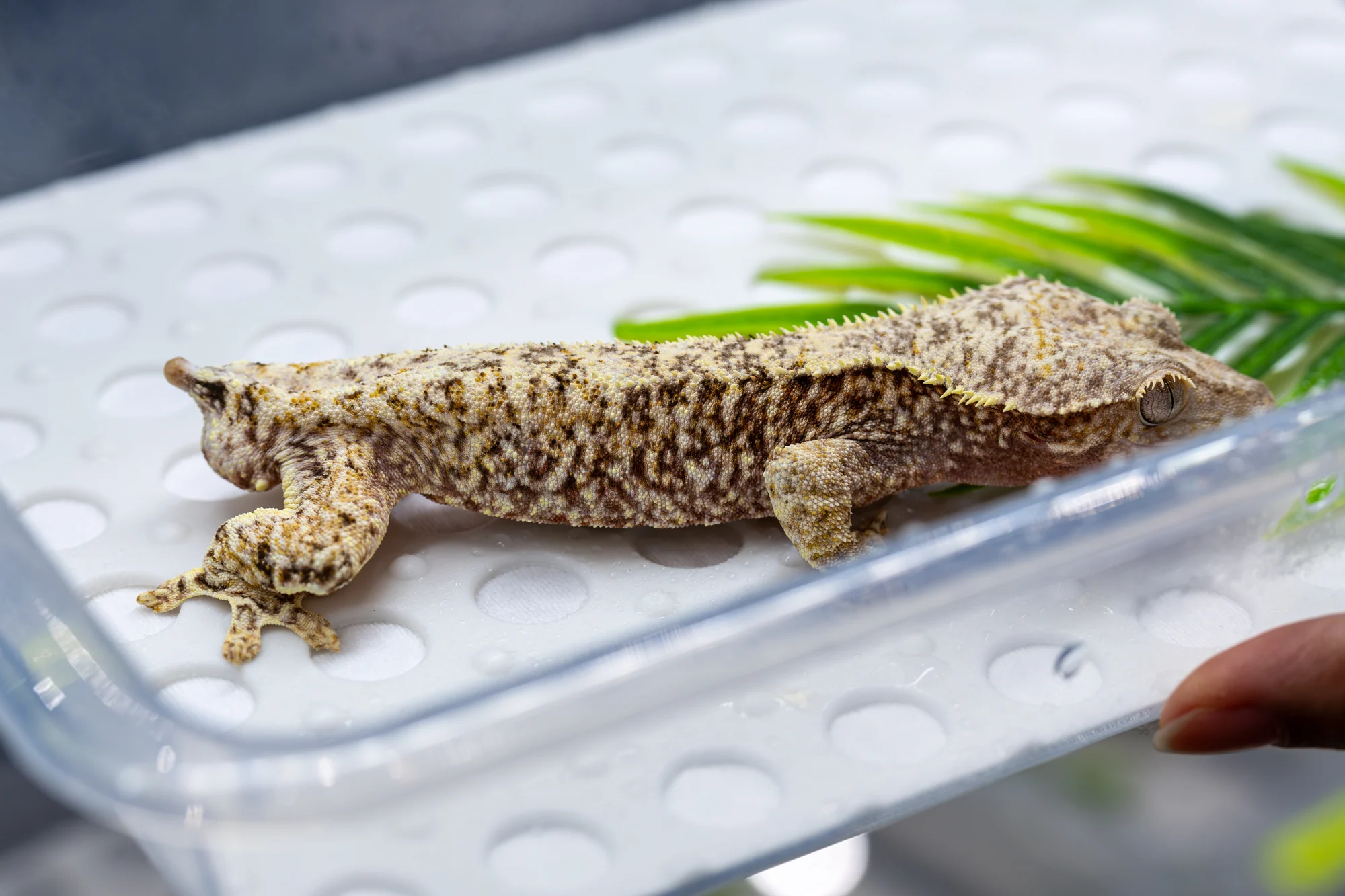
An intricate lateral pattern
Pale areas emerge between dark markings, separating and reconnecting the pattern. Look along the flank and legs to see the density of the markings and their interlocking edges. A different angle reveals another detail of the same side.
Lateral means the side of the body. Follow the flank from behind the shoulder towards the hind leg. An area that initially looks like one dark shape breaks into fragments separated by pale spaces; those spaces become small spots or irregular lines. The relationship between larger pale areas and smaller pieces changes the overall impression. Looking at both sides reveals differences that one photograph cannot show.
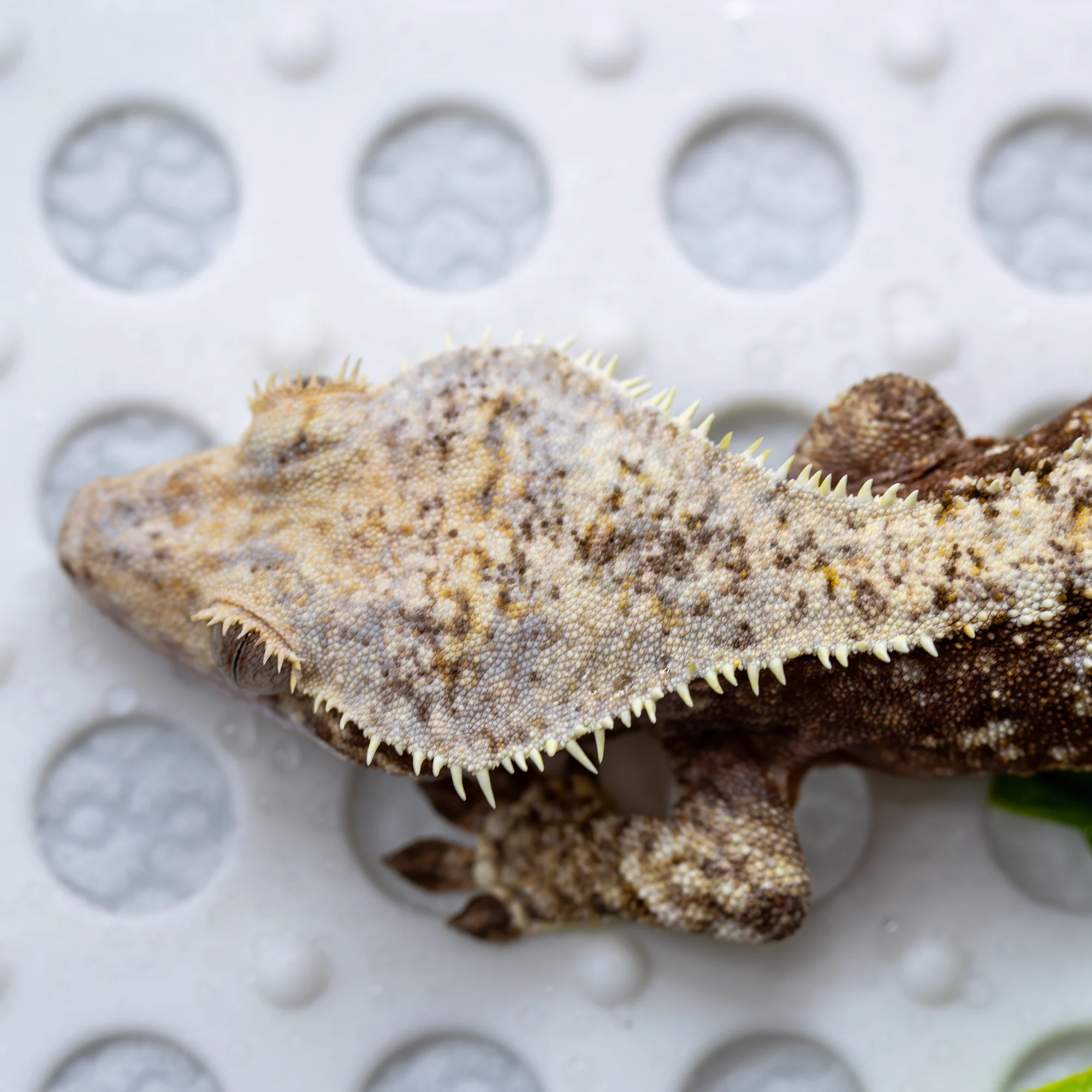
Fine markings across the head
Small spots and contrasting areas continue over the head and back. Follow the outline of the crest, then look at the fine markings within it. These close views reveal details that a whole-body photograph can easily miss.
The close view of the head reveals small light and dark markings together. Instead of reading as a single broad area of colour, these fine details create texture at close range. Compare the pale crest edges, the colour within the head and the size of the markings along the centre of the back. How the head pattern relates to the body is part of the animal’s appeal.
Contrast across the body
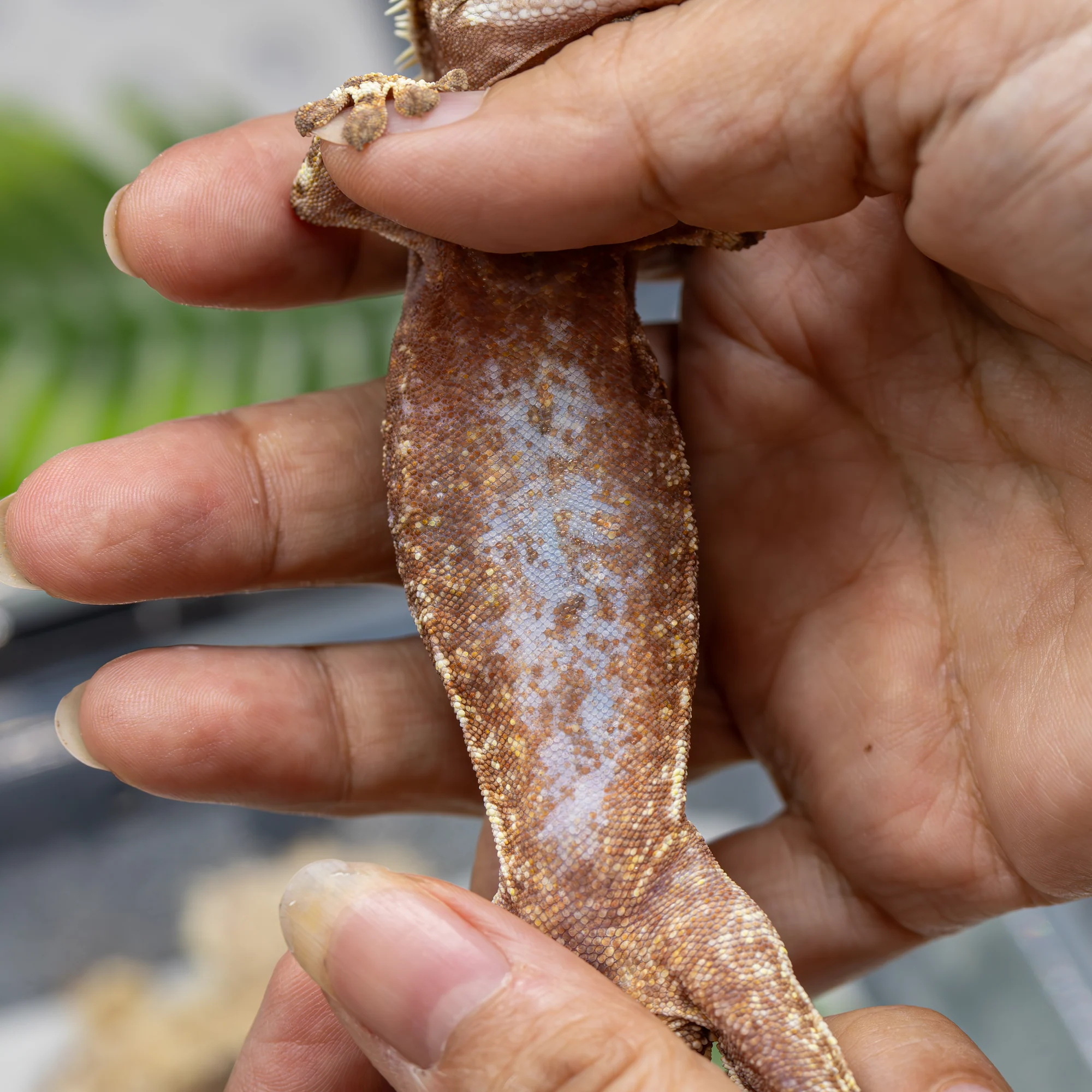
Our underside photograph shows paler areas against the surrounding colour. In the Marbling animals we have observed, these expressions can appear on the torso, belly and around the neck. Compare them with our Pied reference photographs to explore their location and shape.
An underside photograph adds information missing from a whole-body view. Look for a continuous pale band or smaller pale pieces among surrounding colours, and compare their distribution beneath the neck and along the belly. The areas we describe as reduced-pigment expression are part of that comparison. Apparent paleness or translucency in a photograph alone cannot establish the state of pigment cells or the underlying genetics; visible observations and genetic explanations are separate.
From pale backgrounds to deep brown
We do not want to reduce Marbling to one colour or one representative photograph. These three views let you compare pale coverage, background colour and the density of markings.
When pale areas dominate
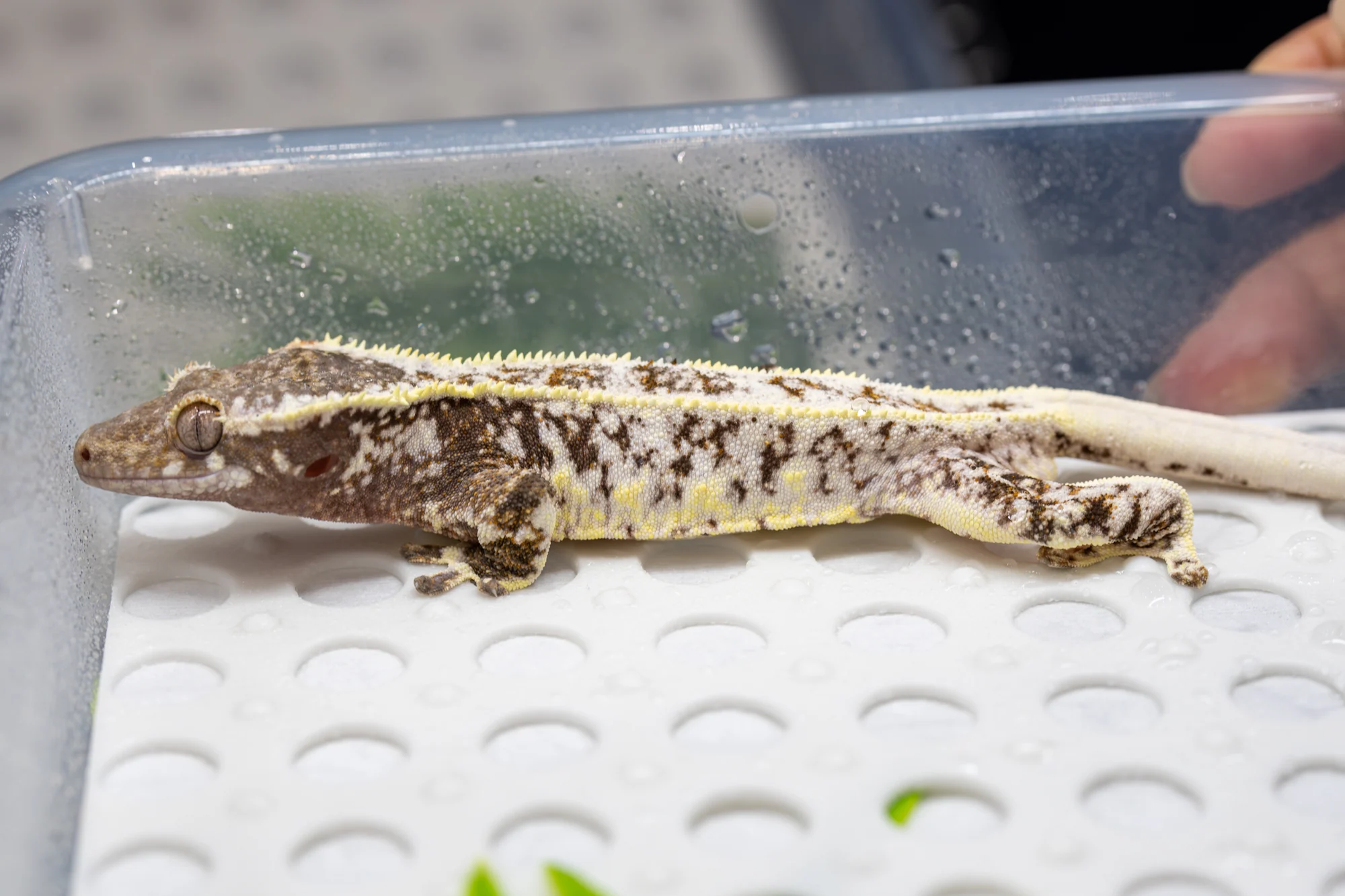
Dark brown markings remain like fragments across a pale cream flank. The larger light areas make their boundaries easy to follow towards the back and legs. This is one of the visual references behind our imagined Lilly White Axanthic combination. The photograph itself is not labelled as Axanthic.
When the dark background leads
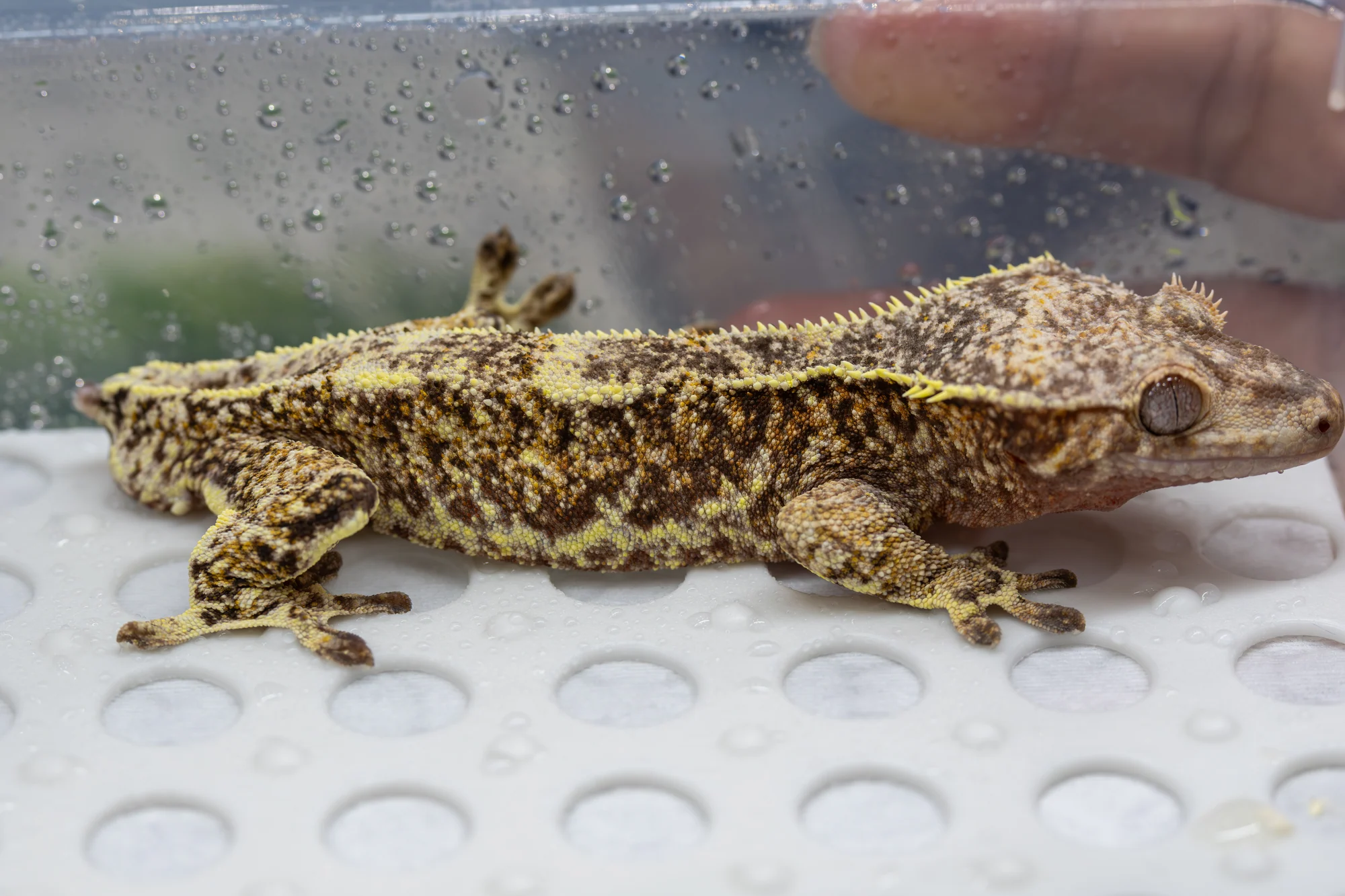
Yellow-toned and lighter markings sit closely together over deep brown. Compared with the first photograph, the balance of light and dark creates a denser overall impression. Rather than counting pale spots alone, follow the contrast and the movement of the pattern from shoulder to hind leg.
When warm colour joins the pattern
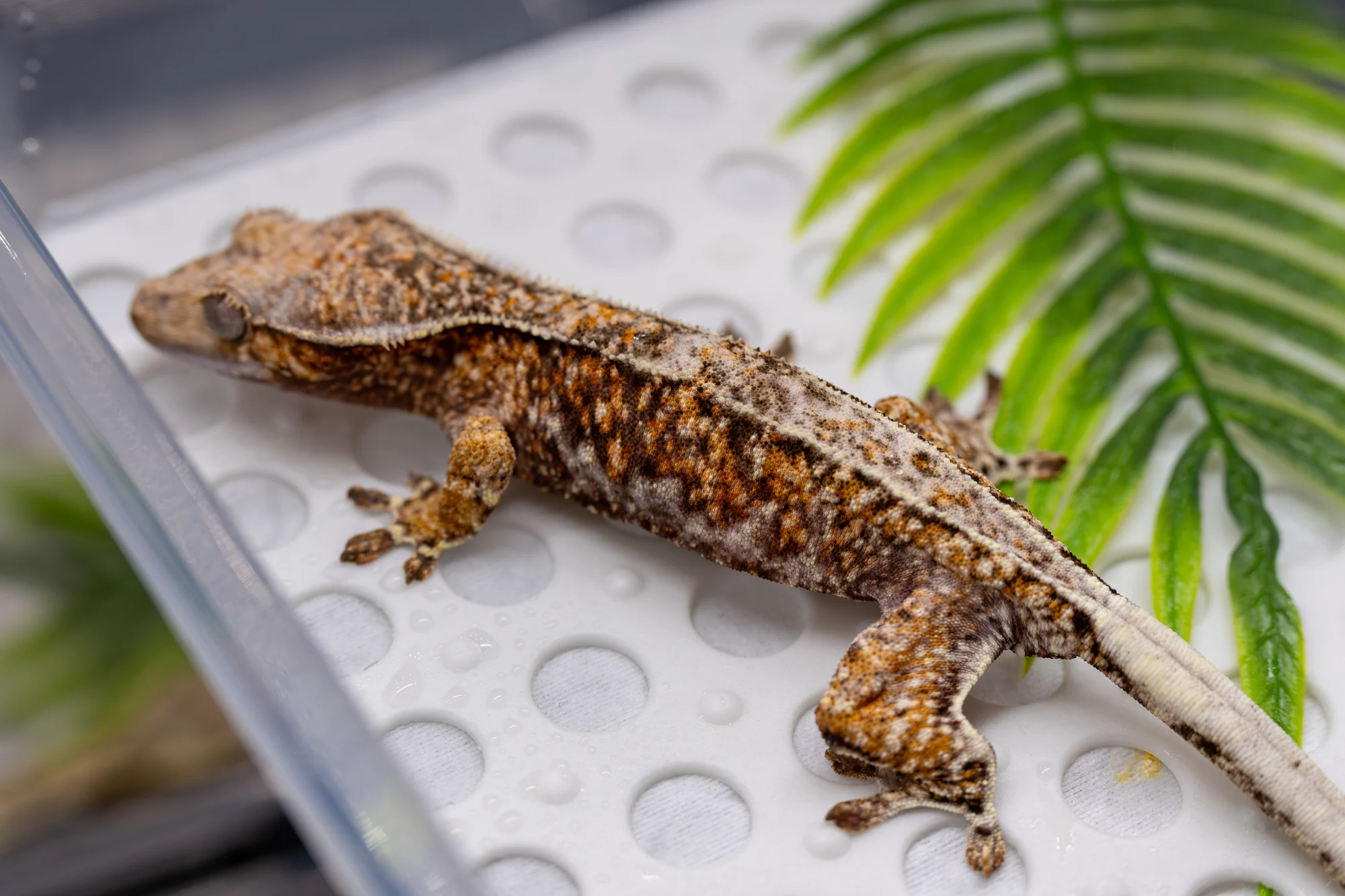
Orange tones on the flank, brown markings and a pale back share the same frame. Marbling need not look almost monochrome to be interesting. Here, the fragmented structure remains visible within warm colours, with layers of colour and pattern following the curve of the body.
These are ways of reading photographs, not official grades or separate genetic categories. Photo numbers are not lineage identifiers. If an expression interests you, use its photo number when asking about the animal and its availability.
Pied and Marbling: a similar impression, different locations
Both can show areas that look paler than their surroundings or seem to interrupt the colour. We do not present these expressions as identical. This comparison uses the supplied photographs and our observations; it is not a genetic diagnostic rule for every line.
Pied: changes that catch the eye at the feet
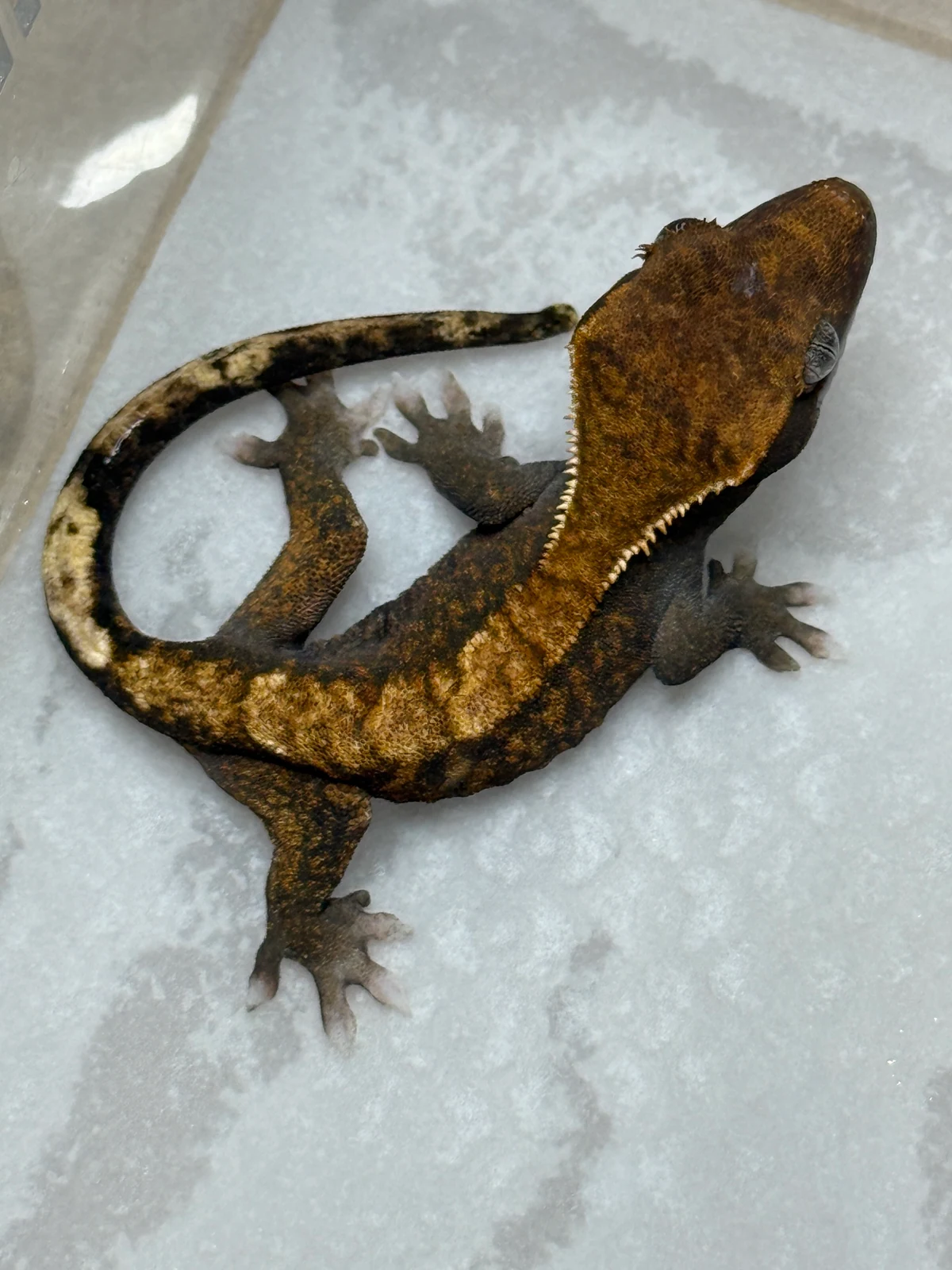
In the Pied photographs supplied, pale areas at the toes and around the feet are particularly noticeable. Their contrast with the darker body brings to mind the familiar description of white socks. Overhead and side views help show which feet have pale areas and how far those areas extend.
In our observed examples, the changes often become conspicuous at the toes. We do not treat that as a rule that every Pied must begin in the same place. The expression of each animal and line still needs individual assessment.
Marbling: looking across the torso and underside
In Marbling, we have observed contrasting pale areas across the torso, belly and beneath the neck. This is why we look beyond the toes to the whole animal and its underside. The belly photograph shows paler areas interspersed with orange-toned and brown regions.
Pied feet and Marbling body expression can have a related visual appeal. A resemblance, however, does not establish the same cause or gene. The useful comparison is where an expression appears, how its boundaries look and how much area it occupies.
Broad opaque white markings, paler-looking skin and areas that appear translucent may look similar in photographs, but deserve separate attention. Whole-body, left and right side, foot and underside photographs, together with lineage information, are more useful than assigning a name from brightness alone.
Pied and Marbling in photographs
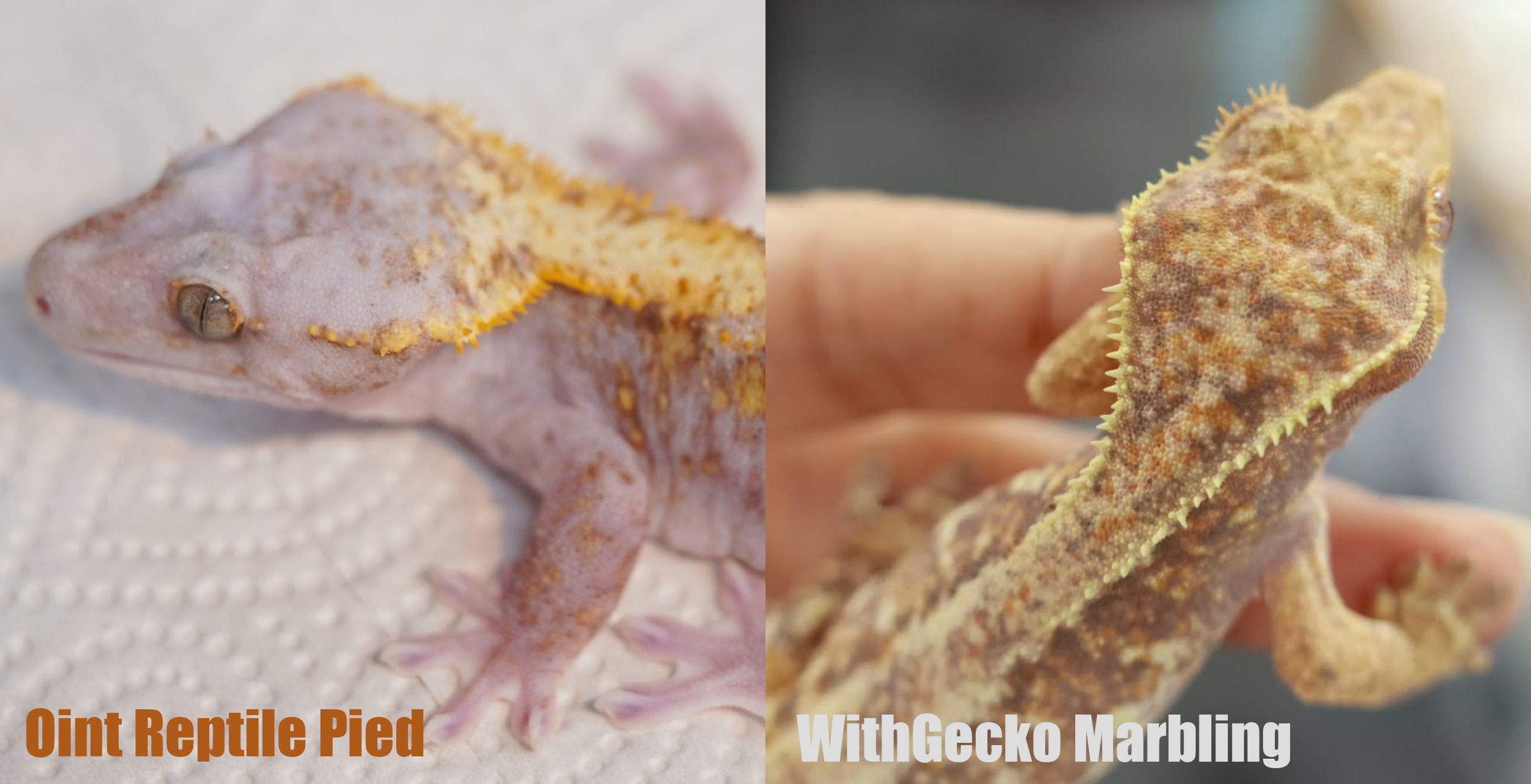
Oint Reptile Pied is labelled on the left and WithGecko Marbling on the right. Compare the broad pale area with the broken cream-and-brown pattern. Different lighting makes pattern distribution more useful to compare than absolute brightness.
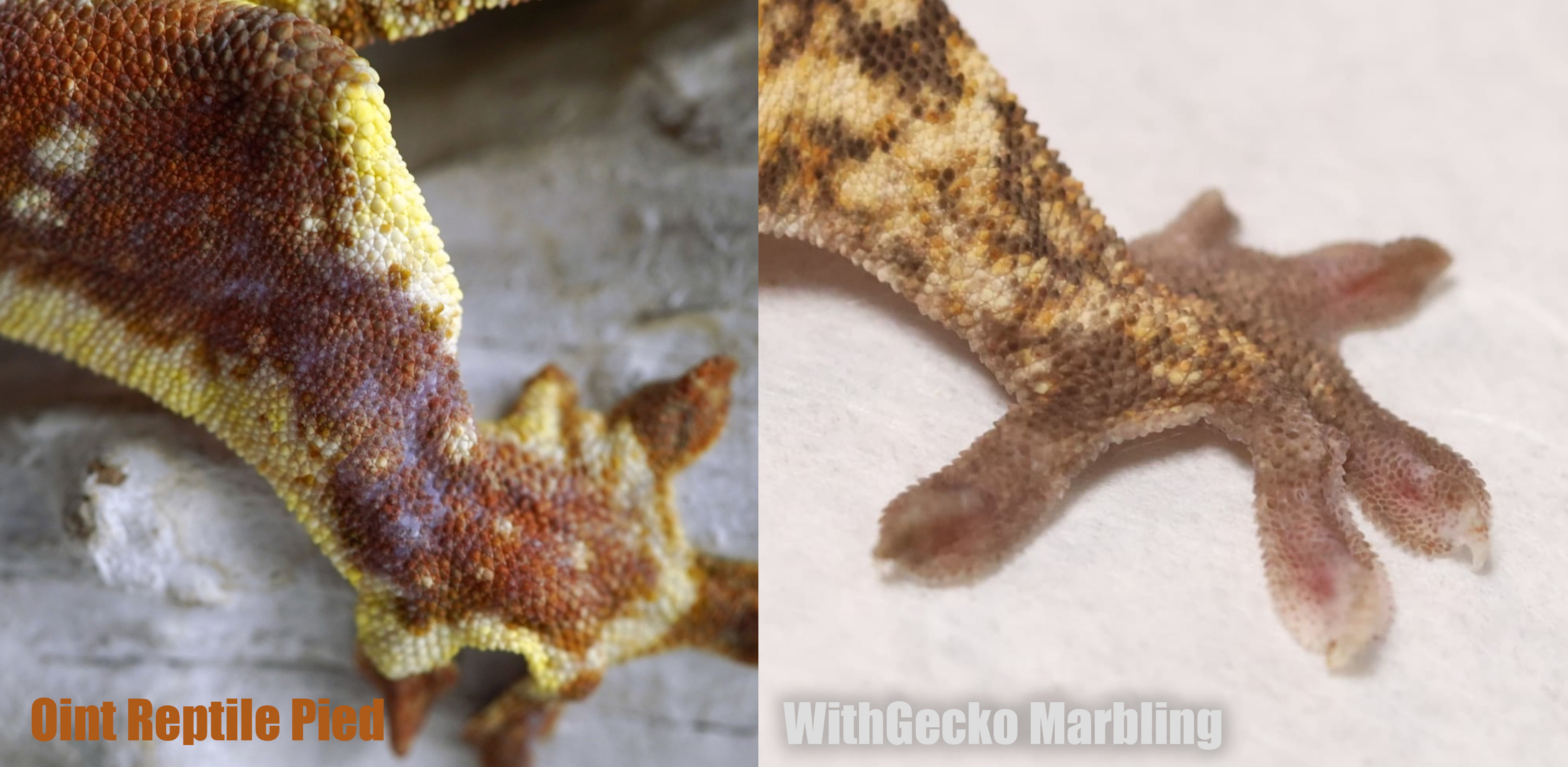
These close-ups show Pied on the left and Marbling on the right. Follow the boundary from the toes towards the foot and leg. Marbling can also show pale areas on the feet, so location alone does not distinguish the two lines.
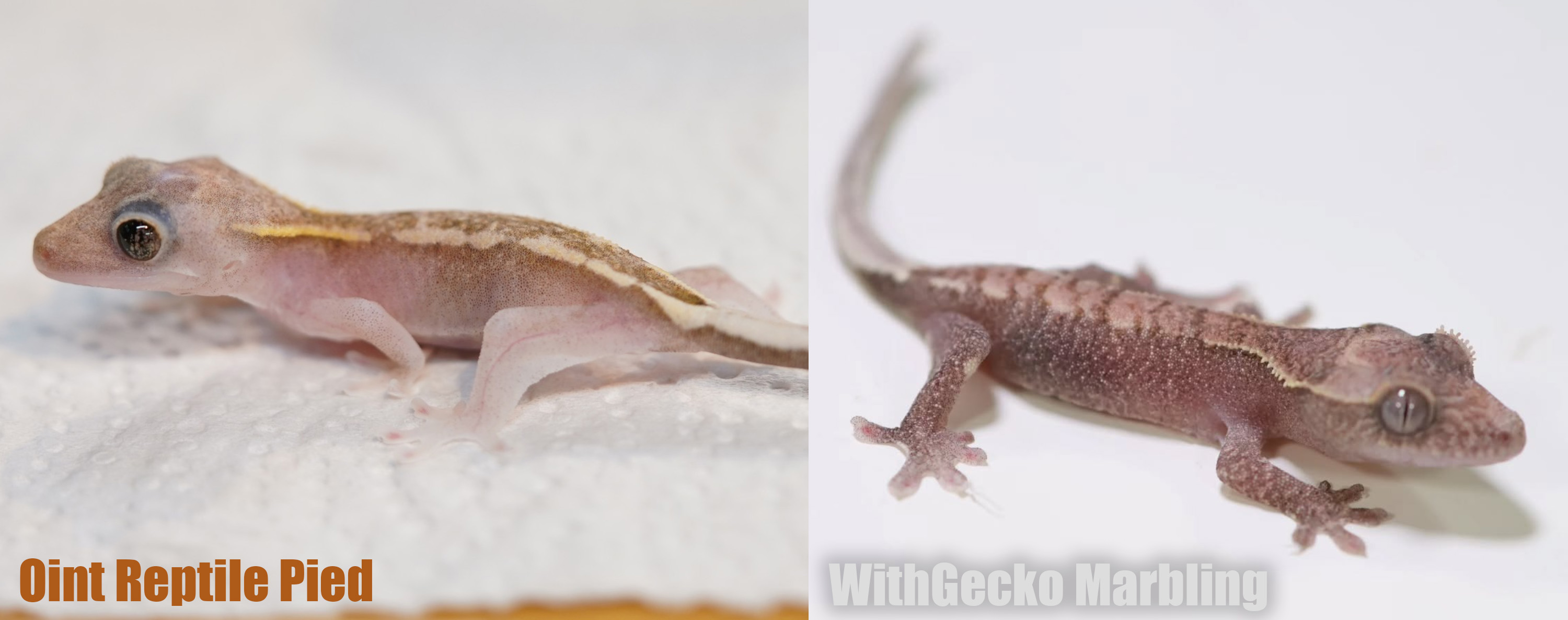
Pied is shown on the left and Marbling on the right. Look at how the pale areas seen in the close-ups sit within the whole animal. These photographs do not establish genotype or predict the appearance at maturity.
When Marbling meets other morphs
Our interest lies both in Marbling’s current beauty and its potential in combinations. The following are two directions we imagine. The photographs are not presented as completed combinations or confirmed breeding outcomes.
Marbling × Pied — intricate flanks above white socks
Imagine pale Pied feet supporting a body covered in intricate Marbling laterals. At the extremities, broad light areas provide a simple visual finish; along the flanks, smaller fragments create complexity. The balance between these different scales of pale expression is what appeals to us.
For this imagined combination, retaining Marbling detail matters more to us than simply increasing white coverage. We picture dark ground and pale fragments remaining distinct, with clear white socks at the feet, rather than a body so pale that the fine pattern becomes difficult to see.
Whether both expressions appear together in offspring, one is more prominent, or an intermediate appearance emerges remains to be established. This is a breeding idea inspired by two visual qualities, not a promised result.
Marbling × Lilly White Axanthic — detail within black and white
Axanthic removes yellow and red colour expression, giving an impression centred on greys, black and white. Lilly White is associated with prominent pale cream or white patterning over areas including the back and flanks. In Lilly White Axanthic animals, the contrast between a background with reduced warm colour and the pale pattern is a major attraction.
Now imagine adding fragmented Marbling laterals and numerous small pale spots. Dark grey or black remains beneath broader white areas, with smaller white pieces scattered along their boundaries. From a distance, the animal reads as black and white; up close, individual details emerge.
Photographs 07, 06 and 05 help us picture that arrangement of markings. Consider how less cream and yellow, more neutral-looking whites and a contrasting dark background might change the impression. An actual Axanthic combination would not necessarily be darker or pure white: coverage and background intensity would need to be assessed in real offspring.
Known genetic characteristics of Axanthic and Lilly White do not, on their own, predict a three-way combination involving Marbling. Visual inspiration and confirmed lineage or genetic information are different things. Within that distinction, we are excited by the possibility of Marbling adding fine detail to the colours and patterns of other morphs.
Marbling’s potential need not be limited to one imagined end result. Exploring how its details might work with another morph’s background, pale coverage and pattern placement is interesting in itself. Enjoy the expressions already visible while looking forward to what future generations may reveal.
Explore the combinations we imagineChoosing the Marbling that appeals to you
Start with the overall impression you enjoy. Do you prefer dark fragments on a pale background, small light spots within deep brown, or warm orange tones alongside an intricate pattern? Those preferences can lead you towards quite different animals.
- Whole animal first, then both sides
- Use a representative photograph for the overall impression, then examine both laterals and the leg markings. A feature prominent in one view may have a different arrangement on the other side.
- Appearance first, then individual records
- Distinguish visible features from confirmed sex, weight and lineage. If you have a particular morph combination in mind, appearance alone should not determine your understanding of the animal’s genetics.
- Enquire with the photo number and your aim
- Include the photo number, your preferred expression, and whether your enquiry concerns an animal or overseas export. For export, include the destination country so the discussion can address that animal and destination.
Enquiries are welcome about currently available Marbling animals. You can also browse photographs and numbers in the full animal and export catalogue. Photographs are a record for viewing; current availability and individual details are confirmed through an enquiry.
Introducing Korean Marbling to the world
WithGecko’s discovery and records form the beginning of this story. Our role is to introduce Marbling as its overseas export distributor. Our own photographs in the KRI collection let you look closely from the moment an animal catches your eye. If a pattern interests you, please include its photo number when enquiring.
We specialise in lizards, with a broad focus on crested geckos, and assist with enquiries about reptiles available in Korea and overseas export. Availability and export arrangements are discussed for the individual animal and destination country.